skylar
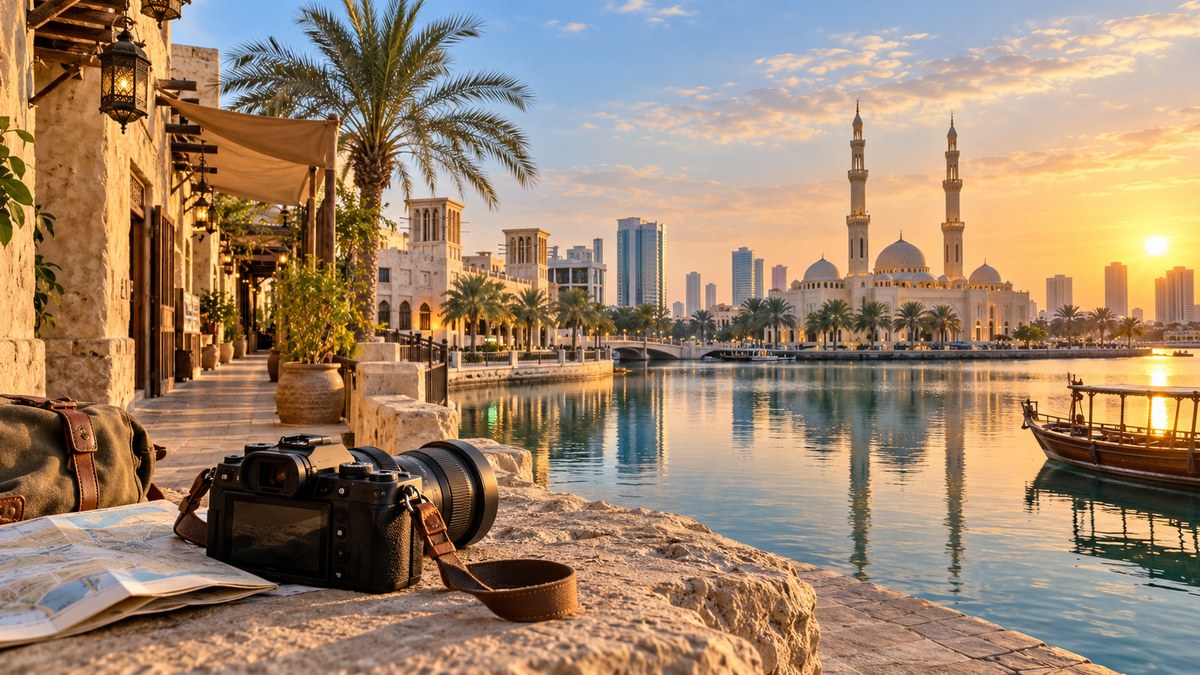
Sharjah is a city that rewards the patient photographer. While Dubai grabs headlines with its skyline, this emirate holds a quieter visual magic. Think carved wooden balconies casting geometric shadows, the gold light of late afternoon hitting sandstone mosques, and waterfronts where dhows float against a pastel sky. For a self-guided Sharjah photography tour, you don’t need a guide. You just need a solid route, the right light, and a willingness to wander.
A successful Sharjah photography tour requires planning around the golden hours, respecting local customs, and knowing which spots work best at which time of day. This guide gives you a complete self-guided itinerary covering heritage areas, modern architecture, and natural landscapes, plus practical gear advice so you return with frames you will actually print.
Why Sharjah Demands Your Camera Bag
Sharjah is the UAE’s cultural capital for good reason. Its streets feel like an open-air museum. You get ornate wind towers, bustling spice souks, and the striking Al Noor Mosque mirrored in the Khalid Lagoon. Unlike a packaged tour, a self-guided approach lets you wait for the light to hit just right. You can stand in one spot for twenty minutes, waiting for the perfect passerby in a white kandura to walk through your frame. That patience is what makes a Sharjah photography tour special.
Some visitors worry about photography etiquette in the UAE. In Sharjah, it is generally fine to photograph public spaces and architecture. Just avoid photographing people without permission, especially women and families. A smile and a gesture asking for permission goes a long way. At mosques, do not shoot during prayer times from inside the prayer hall. The Al Noor Mosque welcomes non-Muslim visitors for guided tours, but check the schedule first.
Your Self-Guided Route: A Four-Stop Loop
This route is designed for a single day, starting around 7:00 AM and finishing just after sunset. You can do it on foot if you stay central, or use a rental car to cover ground faster. The order matters for light direction.
1. Heart of Sharjah: Heritage District
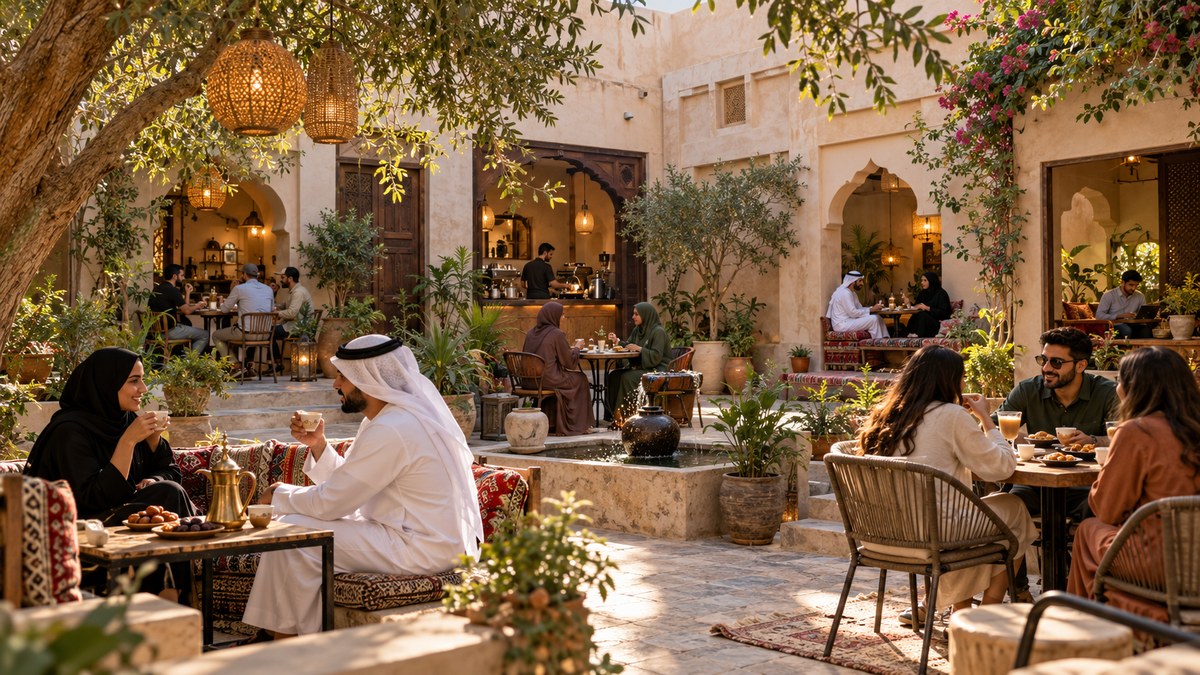
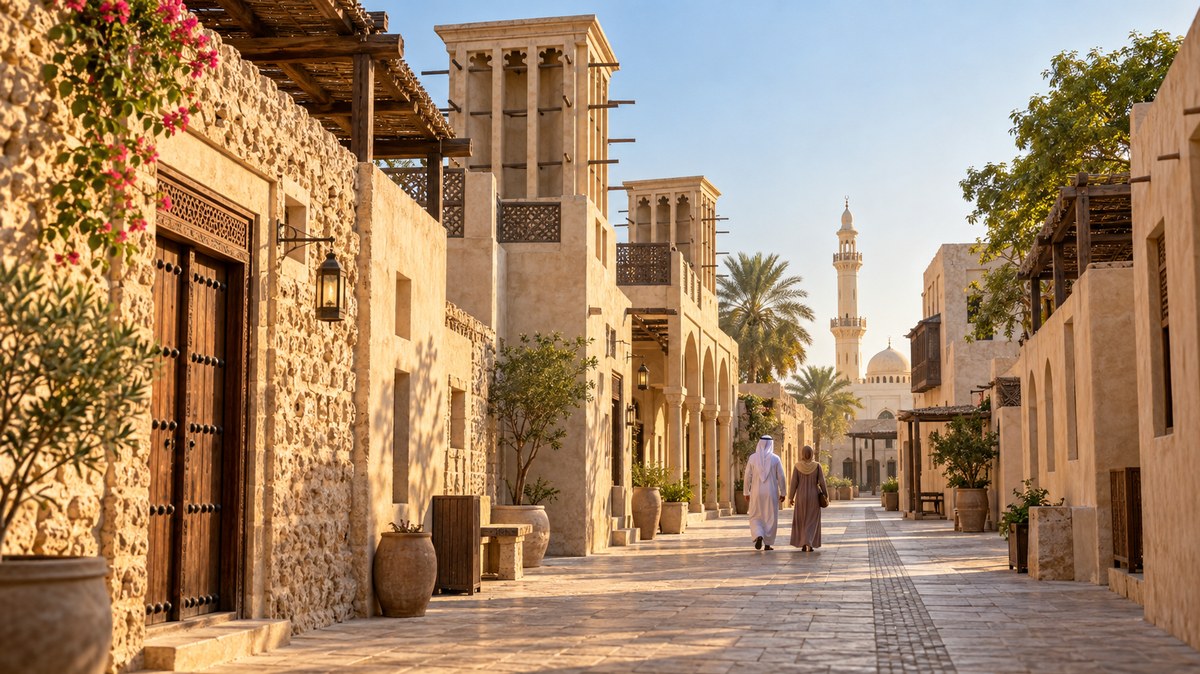
Start here. The Heart of Sharjah project has restored a massive area of traditional buildings. You get alleyways lined with coral stone walls, carved wooden doors, and wind towers that look like they belong in a storybook. The morning light from 7:00 AM to 9:00 AM rakes across the facades, creating long shadows and warm tones.
Key shots:
– The central courtyard with its geometric floor tiles.
– A single door with a brass knocker, shot straight on.
– The narrow alley near the Al Arsah Souk, where light filters through a wooden lattice.
This area is quiet early. You will have whole streets to yourself. Bring a wide lens for the architecture and a 50mm or 85mm for compressed door shots.
2. Al Noor Mosque and Khalid Lagoon
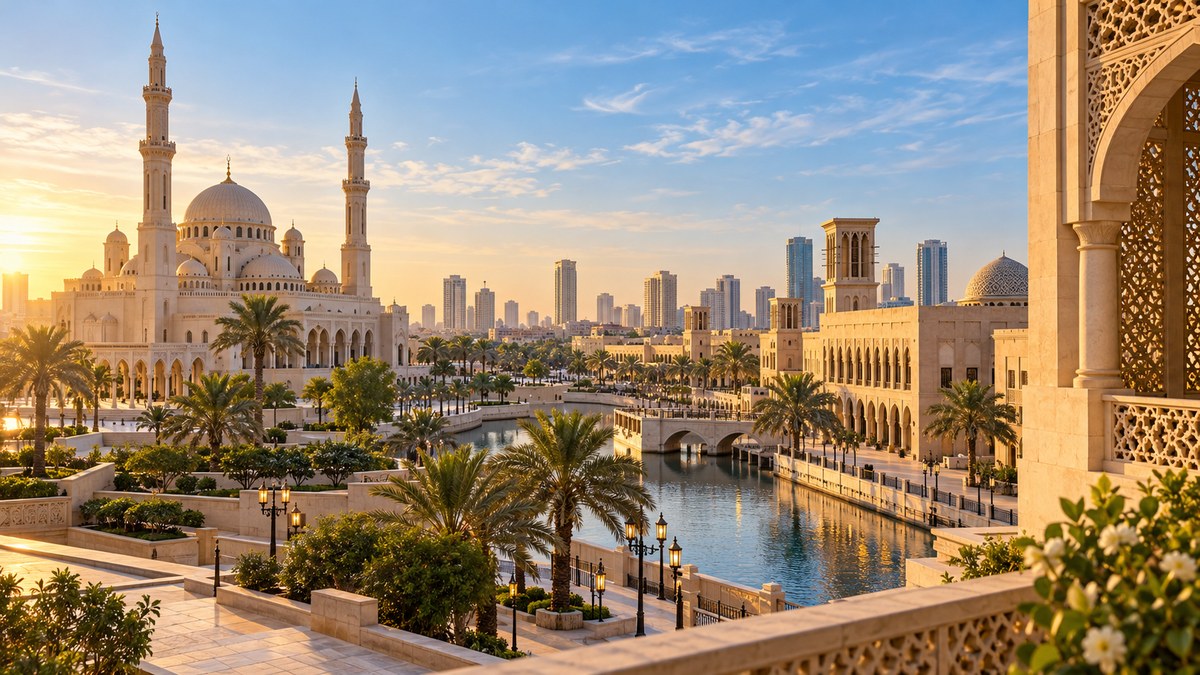
By mid-morning, the light is too harsh for alleyways. Move to the lagoon. The Al Noor Mosque is one of the most photographed buildings in the emirate. Its white facade and twin minarets reflect beautifully in the water. The best angle is from the pedestrian bridge that connects the mosque to the Al Majaz Waterfront. Shoot the mosque with the lagoon in the foreground. A polarizing filter helps cut glare on the water and deepens the blue sky.
If you have a telephoto lens, stand on the eastern side of the lagoon and compress the mosque against the skyline. This is also a good spot for candid street photography of families strolling along the Corniche.
3. Sharjah Art Museum and the Heritage Area
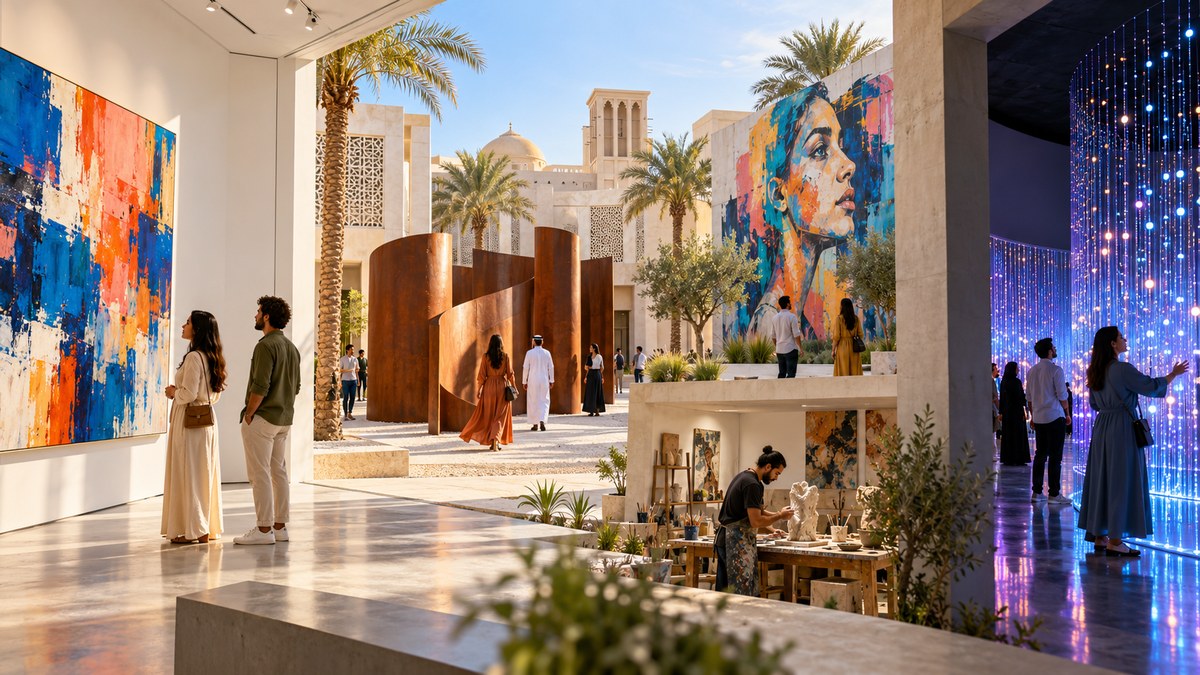
After lunch, head to the Sharjah Art Museum area. The museum itself has a beautiful courtyard and a facade with Islamic geometric patterns. But the real prize is the surrounding streets. The area around the Bait Al Naboodah and the Heritage Museum has white plaster walls that glow in the softer afternoon light. Look for small details: a hanging lantern, a carved window screen, a cat resting in a sunbeam.
This is also where you find the famous blue-tiled facade of the Al Hisn Fort. The fort looks best between 3:00 PM and 4:00 PM when the light warms the stone.
4. Al Majaz Waterfront at Sunset
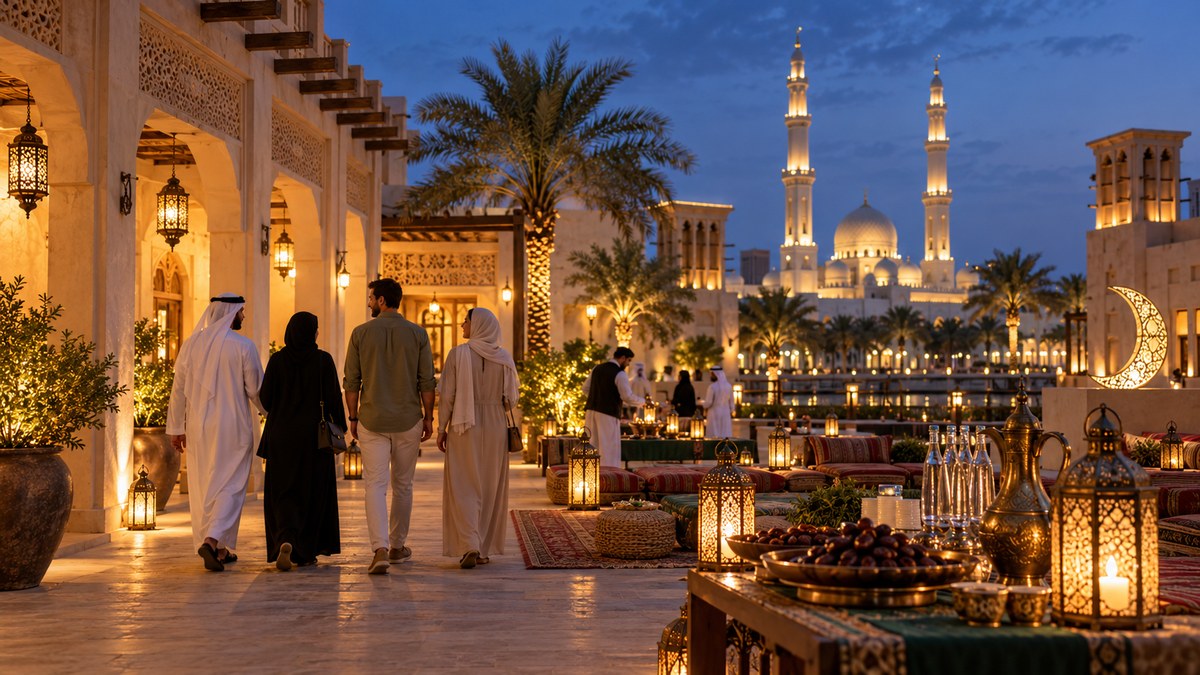
End your day here. The Al Majaz Waterfront is a modern promenade with fountains, restaurants, and a view of the Khalid Lagoon. The sunset light turns the water orange and gold. Position yourself near the dancing fountains for a long exposure shot that blurs the water into silk. If you have a tripod, you can also get the Al Noor Mosque lit up at night, with the sky still holding a deep blue.
This is a relaxed place to finish. You can grab a coffee and review your shots on the camera screen.
Practical Gear for the Sharjah Photography Tour
You do not need a full studio kit. But a few items make a real difference in this environment.
| Gear Item | Why It Helps | Common Mistake to Avoid |
|---|---|---|
| Wide-angle lens (16-35mm) | Captures the scale of mosques and courtyards | Shooting too far back, losing detail |
| Polarizing filter | Cuts glare on water and windows, saturates sky | Forgetting to rotate it for each shot |
| Tripod | Essential for long exposures at the lagoon at dusk | Leaving it in the car because it is heavy |
| 50mm f/1.8 prime | Perfect for door details and street portraits | Using it in tight alleyways where you cannot step back |
| Lens cloth | Dust and humidity can fog your front element | Using your shirt, which scratches the coating |
Expert tip from a local photographer: “Sharjah’s best light is in the first hour after sunrise and the last hour before sunset. The midday sun is brutal and flat. If you can only shoot one window, shoot the golden hours. The Heritage District at 7:00 AM is empty and golden. That is your winning shot.”
Timing Your Shots: A Practical Table
Knowing where to be and when saves you from wasted walking. Here is a simple schedule.
| Time | Location | Subject | Light Quality |
|---|---|---|---|
| 6:45 AM | Heart of Sharjah | Empty alleyways, doors | Soft, warm, long shadows |
| 8:30 AM | Al Noor Mosque | Mosque reflection in lagoon | Bright but not harsh |
| 10:00 AM | Bait Al Naboodah | Courtyard details, wind towers | Harsh, but good for black and white |
| 12:00 PM | Lunch break | Rest, hydrate, review shots | Avoid shooting |
| 3:00 PM | Al Hisn Fort | Fort facade, geometric tiles | Warm, golden side-light |
| 4:30 PM | Al Majaz Waterfront | Lagoon, fountains, skyline | Golden hour, then blue hour |
| 5:45 PM | Sunset position | Long exposure of fountains | Soft, fading, then blue |
Common Mistakes on a Self-Guided Photography Tour
Avoid these pitfalls that can ruin your day.
- Skipping the polarizer. Sharjah’s water features and glass buildings create harsh reflections. A polarizer cuts through them and makes colors pop.
- Shooting everything wide. Not every scene needs a 16mm lens. Zoom in on textures: the rust on a metal gate, the grain of a wooden door, the calligraphy on a mosque wall.
- Ignoring the local calendar. During Ramadan, daytime photography is limited. Shops close during prayer times. Check the essential travel tips for visiting Sharjah on a budget for timing advice.
- Forgetting a backup battery. Heat drains batteries faster. Keep your spare in a cool bag.
- Not asking permission. A simple “Is it okay if I take your photo?” with a smile usually gets a yes. Do not shoot people without their consent.
How to Plan Your Day: A Numbered Process
Follow these steps to lock in your Sharjah photography tour.
- Check the sunrise and sunset times for your travel dates. In summer, sunrise is around 5:30 AM. In winter, it is around 6:45 AM. Adjust your start time accordingly.
- Load your gear the night before. Charge all batteries, format your memory cards, and pack your filters and tripod.
- Arrive at the Heart of Sharjah by 7:00 AM. Park near the Al Arsah Souk. Walk the main alley loop for one hour.
- Drive or walk to Al Noor Mosque by 8:30 AM. Shoot the reflection from the pedestrian bridge. Spend 45 minutes here.
- Take a mid-morning break at a café near the Heritage Area. Review your shots. Delete obvious duds to free up card space.
- Shoot the Art Museum area from 3:00 PM to 4:00 PM. Focus on details and shadows.
- Move to Al Majaz Waterfront by 4:30 PM. Set up your tripod for the sunset and blue hour. Stay until the sky is dark.
- Back up your photos that evening. Use a portable hard drive or cloud upload. Do not wait until you get home.
Why a Self-Guided Tour Beats a Package
A packaged tour rushes you. You spend ten minutes at a spot and move on. A self-guided Sharjah photography tour lets you wait for the light, chase a better angle, or sit on a bench and watch how the scene changes. You also save money. The only costs are your transport, food, and any entry fees for museums (most are under 20 AED).
If you want to extend your trip, consider this tour as part of a larger perfect 3-day itinerary for first-time visitors to Sharjah. You can add a morning at the Sharjah Aquarium or an evening at the Al Qasba canal.
Making Your Photos Stand Out
Sharjah has been photographed many times. To make your images unique, focus on three things:
- People. The city is full of interesting faces. A shopkeeper arranging spices, a child running through a fountain, an elderly man reading on a bench. These human moments tell a story.
- Weather. A cloudy day in Sharjah is rare but dramatic. Overcast skies turn the light soft and even, perfect for portraits and architecture. Do not stay inside just because there is no sun.
- Details. Do not only shoot the wide scene. Get close to a brass lantern, a tile pattern, a carved window screen. These details make a strong series.
Where to Stay for Easy Access
If you are staying overnight, pick a hotel in the Al Majaz area or near the Corniche. You can walk to most of the locations on this route. For recommendations, check the top boutique hotels in Sharjah for a unique stay experience. Staying central means you can also shoot the lagoon at sunrise without a long commute.
Final Thoughts on Your Sharjah Photography Tour
Sharjah is not a city you conquer in one day. But this self-guided route gives you the best of its photogenic corners. You will leave with a memory card full of warm, textured images that show a different side of the UAE. The key is to slow down. Wait for the light. Respect the people. And enjoy the quiet beauty of a city that rewards those who look closely.
Pack your camera, charge your batteries, and get out there before the sun rises. The best shots are waiting.