skylar
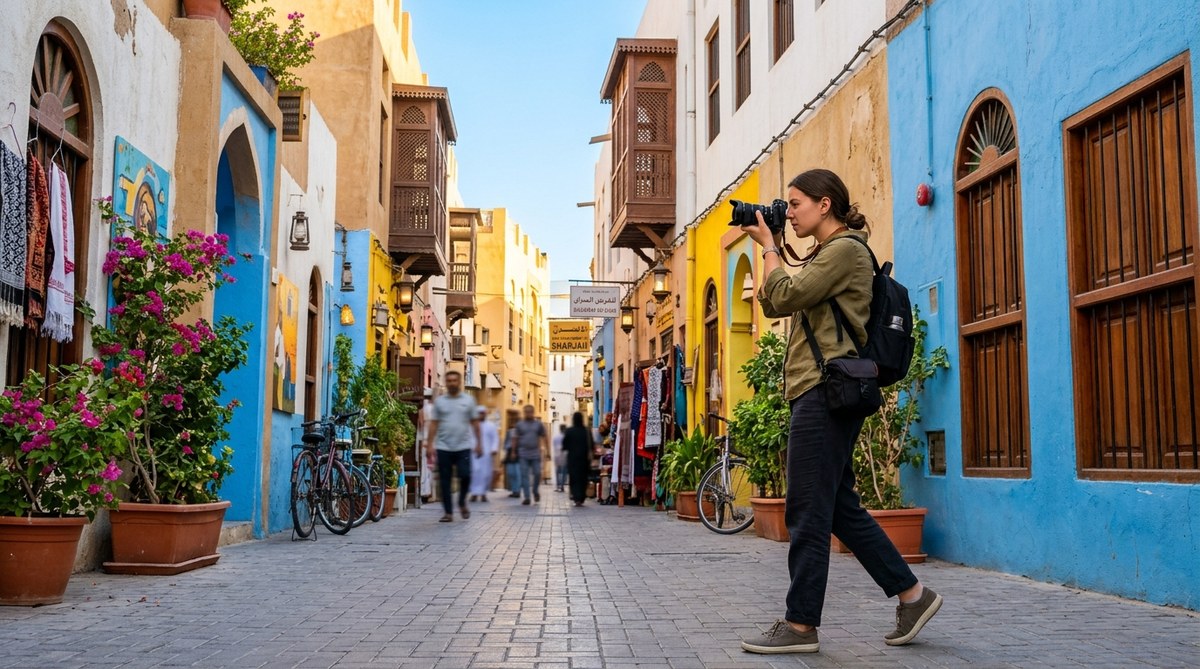
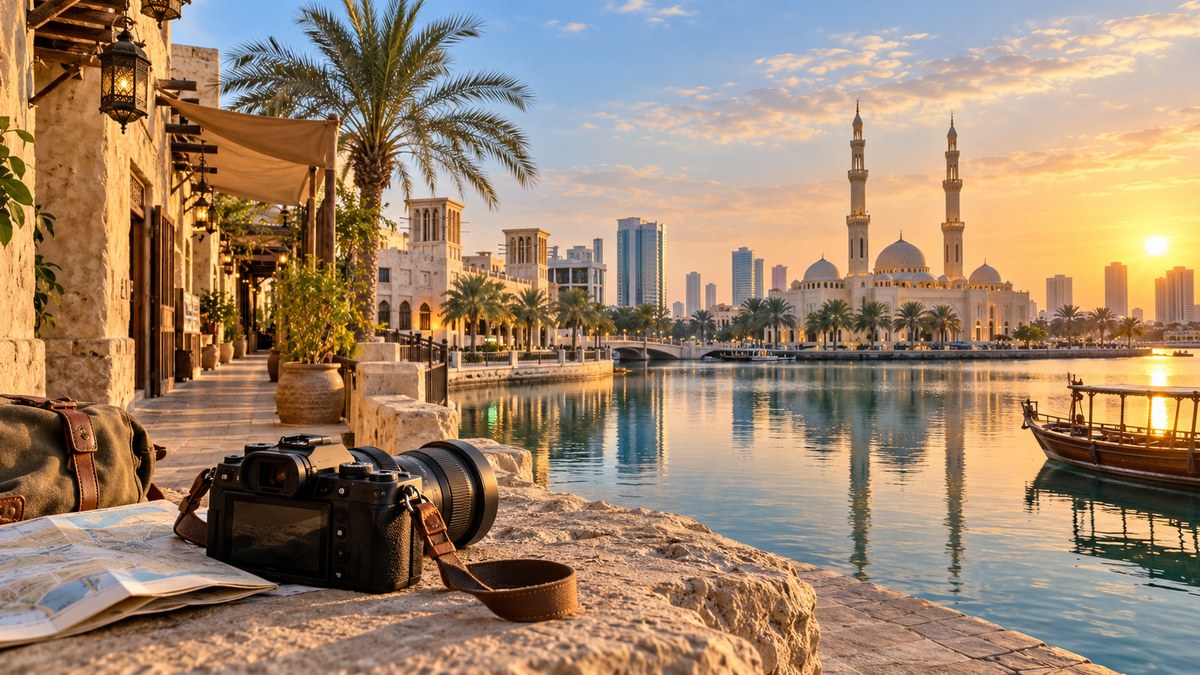
Sharjah has a way of catching you off guard. You come for the culture, but you stay for the light. The way it falls on old coral stone walls, the way it bounces off the blue of the Corniche, the way it softens into gold over the Central Souk. For a travel enthusiast or a hobbyist photographer, this emirate is a playground of colour and texture. It is not about rushing from landmark to landmark. It is about walking slowly, with your camera ready, letting the streets tell their story. This guide will help you plan a perfect Sharjah photography walk in 2026, focusing on the most colourful neighbourhoods and the practical steps to capture them.
A successful Sharjah photography walk in 2026 blends early morning light with late afternoon warmth. Focus on three core areas: the Heritage District for texture, the Central Souk for colour, and Al Majaz for modern reflections. Walk between them, shoot during golden hours, and respect local customs. You will leave with portraits of a city that feels both ancient and alive.
Why Sharjah is a Dream for Street Photography
Sharjah is not trying to be Dubai. It does not need to be. What it offers photographers is something rarer: authenticity. The streets are alive with everyday moments. Men play cards in shaded courtyards. Women in colourful abayas walk past vibrant murals. Children kick footballs on narrow lanes. The architecture mixes traditional Islamic design with mid-century modernism and contemporary art spaces. Every corner holds a composition.
For a Sharjah photography walk in 2026, the city offers three distinct visual palettes. First, the earthy tones of the Heritage District: sand-coloured stone, wooden doors, wind towers. Second, the saturated hues of the Central Souk: gold, spice, textiles, and glass. Third, the cool blues and greens of the waterfront and Al Majaz: fountains, modern bridges, and the evening sky. Your walk should connect these three worlds.
Your Photography Walk Route: Three Neighbourhoods in One Morning
The beauty of Sharjah is that its most photogenic areas are walkable. You can start at one end and finish at the other without needing a car. Here is the route I recommend for a Sharjah photography walk in 2026.
1. The Heritage District (Al Shuwaihein and Al Mareija)
Start early. Arrive by 6:30 AM in the cooler months (October to April) or 5:30 AM in summer. The light is soft, the streets are empty, and the temperature is manageable. Park near the Sharjah Art Museum or the Bait Al Naboodah.
What to photograph here:
– The wind towers against a clear blue sky
– The carved wooden doors of the heritage houses
– The narrow alleyways that create natural leading lines
– The Souk Al Arsah, one of the oldest markets in the UAE, with its low ceilings and antique shops
Take your time. This area rewards patience. Wait for a local to walk through a shaft of light. Frame a doorway with a shadow falling across it. The textures here are incredible: coral stone, palm wood, gypsum plaster.
Expert advice: “The best street photography happens when you stop looking for grand scenes and start noticing small details. A single brass lock on a wooden door can tell you more about Sharjah than a wide shot of the skyline.” Local photographer Noora Al Mazroui, speaking at the 2025 Xposure Festival.
2. The Central Souk (Souk Al Markazi)
From the Heritage District, walk east towards the lagoon. The Central Souk is a covered market that sits on an island in the middle of Khalid Lagoon. It is a building shaped like an airplane from above, but from ground level it is a maze of shops selling gold, perfume, carpets, and electronics.
What to photograph here:
– The rows of gold jewellery glowing under spotlights (ask permission first)
– The spice stalls with their mountains of red, yellow, and orange powders
– The reflections in the water outside the souk
– The modern architecture of the souk itself, with its arches and geometric patterns
The light inside the souk is mixed: fluorescent tubes, natural light from skylights, and the warm glow of shop lamps. This creates challenging but rewarding conditions. Shoot in RAW so you can adjust white balance later.
3. Al Majaz Waterfront and the Corniche
Exit the souk and walk across the bridge to Al Majaz. This is where Sharjah meets the water. The Corniche stretches for kilometres along the lagoon. Families picnic on the grass. Cyclists glide past. The fountains dance in the evening.
What to photograph here:
– The Al Qasba canal with its colourful lights and boats
– The Sharjah Fountain, which shoots water 100 metres into the air
– The modern skyline of Sharjah reflected in the lagoon at sunset
– The human element: children running, couples walking, fishermen casting lines
This part of the walk is best done in the late afternoon. The light turns warm around 4:30 PM in winter and 6:00 PM in summer. The golden hour here is spectacular because the water acts as a giant reflector.
Practical Steps for Planning Your Walk
A good photography walk needs preparation. Here is a numbered list of steps to take before you leave your hotel or home.
-
Check the weather and sunrise/sunset times. In Sharjah, the golden hour is short but intense. Use a weather app to know exactly when the sun will rise and set. In 2026, sunrise in January is around 6:50 AM, and sunset around 5:40 PM. In July, sunrise is at 5:30 AM, and sunset at 7:10 PM.
-
Pack light but smart. Carry one camera body and two lenses: a wide-angle zoom (16-35mm) for architecture and a prime lens (50mm or 85mm) for portraits and details. Bring a small tripod for low-light shots at the fountain. Carry water, sunscreen, and a hat. The UAE sun is strong even in winter.
-
Dress respectfully. Sharjah is more conservative than Dubai. For photography walks, wear long trousers and a shirt that covers your shoulders. This helps you blend in and shows respect. It also makes locals more comfortable with you photographing them.
-
Ask before photographing people. A smile and a gesture go a long way. Many locals will agree if you ask nicely. Some may ask for a small payment or refuse entirely. Respect their decision. For street scenes, focus on candid shots of people in public spaces, but avoid close-ups of individuals without permission.
-
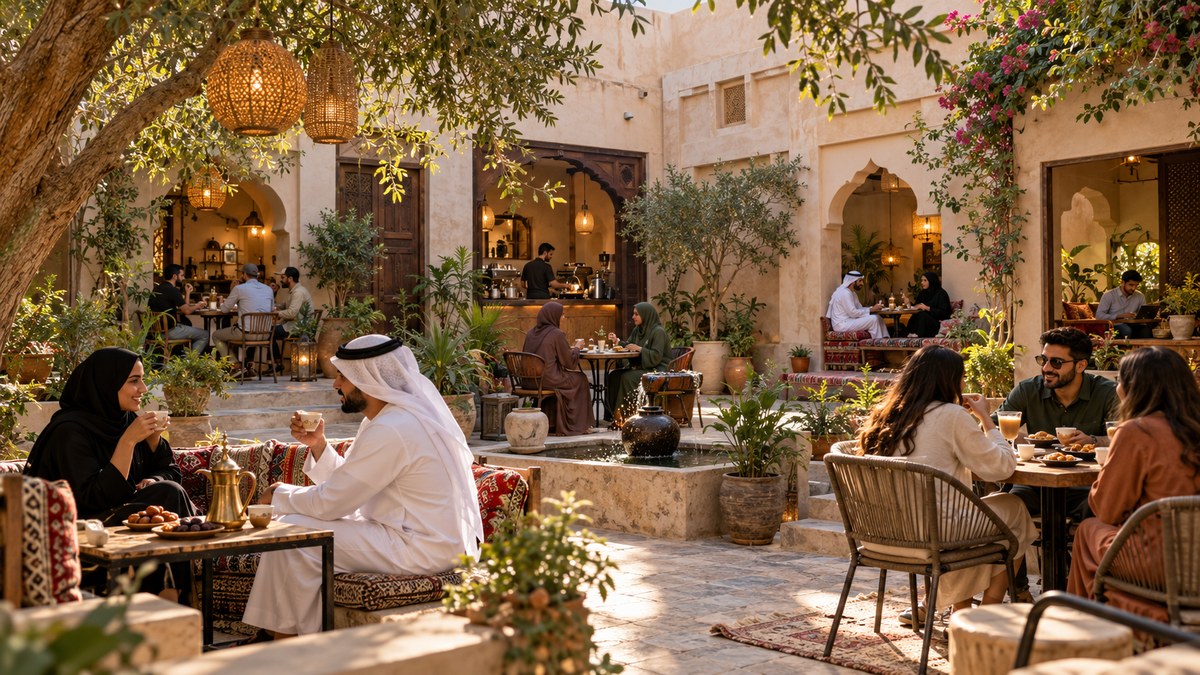
Plan for breaks. Sharjah has excellent cafes where you can rest, review your shots, and recharge. The Heritage District has several traditional coffee shops. Al Majaz has modern cafes with lagoon views. Use these breaks to hydrate and edit.
Gear and Settings for the Best Results
Not everyone has the same camera. That is fine. The principles of good photography apply whether you use a DSLR, a mirrorless camera, or a smartphone. Here is a table to help you match your gear to the conditions you will face in Sharjah.
| Scene Type | Recommended Lens | Camera Setting | Common Mistake |
|---|---|---|---|
| Narrow alleyways in Heritage District | Wide-angle (16-24mm) | Aperture priority, f/8 for depth | Using flash and losing the mood |
| Spice stalls in Central Souk | Prime (50mm or 85mm) | Manual mode, ISO 800-1600 | Overexposing the bright colours |
| Reflections on the lagoon | Telephoto (70-200mm) | Shutter priority, 1/250s | Not using a polarising filter |
| Evening fountain at Al Majaz | Wide-angle or standard zoom | Tripod, 2-4 second exposure | Shooting at high ISO instead of using a tripod |
| Portraits of locals | Prime (85mm or 50mm) | Aperture priority, f/2.8 or f/4 | Not asking permission first |
The most common mistake photographers make on a Sharjah photography walk is trying to shoot everything. Slow down. Pick three or four compositions per location. Wait for the light to change. Wait for a person to walk into the frame. The best shots come from patience.
Where to Eat and Rest During Your Walk
A photography walk can last three to four hours. You will get hungry and tired. Plan your breaks around these spots.
-
For breakfast or a mid-morning snack: Visit the traditional eateries in Sharjah for authentic Emirati flavours. Try a cheese sambousek or a sweet luqaimat with your coffee. These places are often near the Heritage District.
-
For lunch: Head to the Al Majaz waterfront area. There are several restaurants with outdoor seating. The view of the lagoon is a bonus. You can review your morning shots while you eat.
-
For a coffee break: The Central Souk has a small cafe on the upper floor. It is quiet and air-conditioned. Order a karak chai and watch the shoppers below. It is a great spot for candid photography too.
If you are staying longer, consider the boutique hotels in Sharjah for a unique stay. Some of them are within walking distance of the Heritage District and offer rooftop views.
Timing Your Walk for the Best Light
The sun in the UAE is harsh between 11:00 AM and 3:00 PM. Shadows disappear. Colours wash out. Skin tones become unflattering. Plan your walk to avoid these hours.
Option A: The early bird (October to April)
– 6:30 AM to 8:30 AM: Heritage District
– 8:30 AM to 9:30 AM: Walk to Central Souk
– 9:30 AM to 11:00 AM: Central Souk (the covered market protects you from the sun)
– 11:00 AM to 3:00 PM: Break for lunch, rest, and edit
– 3:30 PM to 5:30 PM: Al Majaz and Corniche
– 5:30 PM to 6:30 PM: Golden hour and sunset
Option B: The summer strategy (May to September)
– 5:30 AM to 7:30 AM: Heritage District
– 7:30 AM to 9:00 AM: Central Souk
– 9:00 AM onwards: Retreat to air-conditioned spaces
– 5:00 PM to 7:00 PM: Al Majaz and Corniche (sunset is later)
Summer in Sharjah is hot and humid. But the light is beautiful. The haze creates a soft glow. The skies turn dramatic shades of orange and pink. If you can handle the heat, the summer months offer unique photographic opportunities.
What to Avoid on a Sharjah Photography Walk
Some mistakes are easy to make. Here is a bulleted list of things to avoid.
-
Avoid shooting during midday. The light is flat and unflattering. Use this time to rest, edit, or visit indoor attractions like the museums in Sharjah for history lovers.
-
Avoid photographing government buildings or military areas. This is strictly prohibited. Stick to public spaces and markets.
-
Avoid dressing in shorts or sleeveless tops. You will feel uncomfortable and may attract unwanted attention. Dress like a local: modest and covered.
-
Avoid rushing. A photography walk is not a race. If you spend 20 minutes in one alleyway waiting for the perfect light, that is time well spent.
-
Avoid ignoring the background. Check every corner of your frame. A trash bin or a parked car can ruin a great composition. Move your feet to change the angle.
Adding Depth to Your Photography Walk
A Sharjah photography walk in 2026 can be more than just a visual exercise. It can be a cultural experience. While you walk, listen. The call to prayer echoes across the city five times a day. The sound of the azan mixing with the traffic and the birds creates a unique audio texture. Try to capture that feeling in your images.
If you want to go deeper, join a guided tour. The self-guided tour of Sharjah’s heritage districts is a great starting point. It gives you historical context for the buildings you are photographing. Knowing that a particular wind tower was built in 1930 to cool a merchant’s home adds meaning to your image.
You can also combine your walk with a visit to the cultural experiences in Sharjah for first-time visitors. The Sharjah Art Museum, the Islamic Civilization Museum, and the Calligraphy Museum are all within walking distance of the Heritage District. They offer air-conditioned breaks and incredible subject matter.
Capturing the Spirit of Sharjah
The best photographs from a Sharjah photography walk are not the ones you see on postcards. They are the ones that feel personal. The old man reading a newspaper in the shade. The child chasing pigeons in the square. The shopkeeper arranging his spices in perfect rows. These are the moments that define the city.
To capture them, you need to be present. Put the camera down sometimes. Sit on a bench. Watch people. Learn the rhythm of the street. Then pick up your camera and shoot. Your images will have more soul because you took the time to understand the place.
Your Photography Walk Checklist
Before you head out, use this checklist to make sure you have everything.
- Camera body and two lenses
- Extra memory cards and batteries
- Polarising filter (for reflections and skies)
- Small tripod or gorillapod
- Water bottle (at least one litre)
- Sunscreen and a hat
- Comfortable walking shoes
- Light jacket or scarf (for air-conditioned spaces and evening)
- Notebook and pen (to jot down locations and ideas)
- Power bank for your phone (for maps and navigation)
Making the Most of 2026 in Sharjah
2026 is a good year for a Sharjah photography walk. The city continues to invest in its cultural infrastructure. New public art installations appear regularly. The Xposure International Photography Festival, held annually in Sharjah, attracts photographers from around the world. If your visit coincides with Xposure (usually in February or March), you can attend workshops, exhibitions, and portfolio reviews. It is a great way to improve your skills and meet other photographers.
The hidden gems of Sharjah’s cultural scene are also worth exploring. Small galleries, community art spaces, and pop-up exhibitions are scattered across the city. They offer unique subject matter and a chance to see Sharjah through local eyes.
Final Thoughts on Your Sharjah Photography Walk
A Sharjah photography walk in 2026 is not about ticking off landmarks. It is about seeing. It is about slowing down and noticing the way light falls on old stone, the way colours clash and complement each other in the souk, the way a city that respects its past can still feel vibrant and alive.
Take your time. Walk the route I suggested, but feel free to wander. Get lost in the alleyways. Sit in a cafe and watch the world go by. Ask a shopkeeper about his family. These small interactions will enrich your photography more than any filter or lens.
When you return home and look at your images, you will not just see a travel album. You will see a portrait of a city that welcomed you, that showed you its colours, and that asked you to look a little closer. That is the gift of Sharjah. Go and capture it.