skylar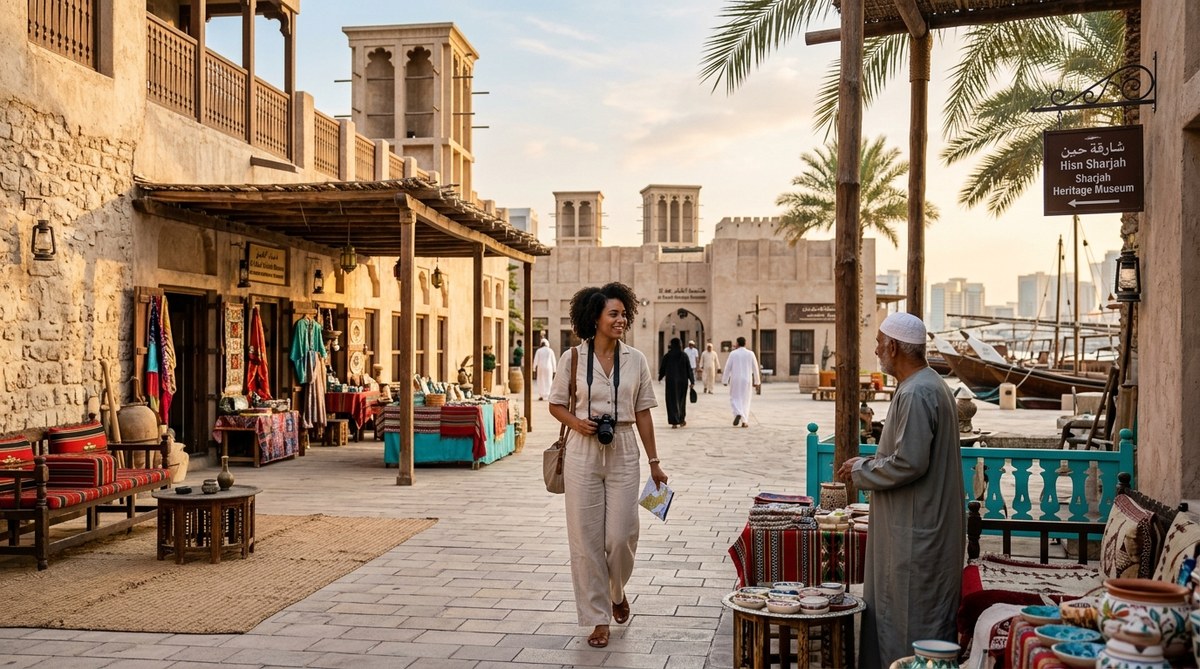
Sharjah’s heritage districts are the soul of the UAE’s cultural capital. Walking through them feels like stepping into a living museum where wind tower houses, spice scents, and the call to prayer weave together. For expats and culturally curious travelers based in the UAE, a day spent here offers a genuine connection to Emirati history without needing a guidebook. This is your self guided itinerary for 2026, built from local insights and updated details so you can wander with confidence.
This 2026 itinerary for Sharjah’s heritage districts is designed for self guided travelers who want depth without rush. Start at the Heart of Sharjah, visit the Calligraphy Museum, stroll the Heritage Area souks, eat at a traditional restaurant, and end at Al Hisn Fort. Use public parking near the Corniche, wear comfortable shoes, and bring a refillable water bottle. Timing is everything: mornings are cooler and quieter.
Your Morning: Start at the Heart of Sharjah
Begin your day at the Heart of Sharjah, the largest heritage restoration project in the region. This area is not a theme park. It is a restored historic quarter where people still live, work, and trade. The narrow alleyways and coral stone buildings set the tone for your entire visit.
1. Visit the Sharjah Calligraphy Museum
Your first stop should be the Sharjah Calligraphy Museum, tucked inside a beautifully restored traditional house. The museum showcases works from Arab and international artists. You will see how the written word became an art form across centuries.
Why start here? The museum opens at 8:00 AM, which means you beat the crowds and the heat. Spend about 45 minutes inside. Entry is free, which is a nice bonus for a budget friendly trip.
2. Walk Through the Heritage Area Souks
After the museum, walk five minutes to the Souk Al Arsah. This is one of the oldest markets in the UAE. Unlike modern malls, this souk feels intimate. You will find antiques, pashminas, traditional perfumes, and handmade crafts. The vendors are friendly and rarely pushy.
What to buy here: Look for small wooden chests, frankincense, or a handwoven basket. These make meaningful souvenirs that support local artisans.
3. Stop for Breakfast at a Local Cafe
By 9:30 AM, you will want a break. Head to a traditional cafe near the souk. Order Arabic coffee with dates or a cup of karak chai. Many cafes in the Heart of Sharjah serve breakfast dishes like balaleet (sweet saffron noodles with egg) or chebab (Emirati pancakes).
“The best way to experience Sharjah’s heritage is slowly. Do not try to see everything. Pick three or four places and sit for a while in each one.” — Ahmed Al Midfa, a local heritage guide I met during a walking tour.
Midday: Museums and Forts
The middle of the day gets hot, so this part of the itinerary focuses on indoor spaces with air conditioning and deep cultural value.
4. Explore Sharjah Fort (Al Hisn)
Al Hisn, also known as Sharjah Fort, is a short walk from the souk. This was the ruling family’s residence and a defensive stronghold. The museum inside tells the story of Sharjah’s transformation from a fishing village to a cultural hub.
Plan for 60 minutes here. The fort has shaded courtyards and interactive exhibits. Do not miss the watchtower view of the surrounding heritage district.
5. Lunch at a Traditional Restaurant
By 1:00 PM, you will be hungry. Walk to a restaurant in the Heart of Sharjah that serves Emirati cuisine. Look for places that offer a set lunch menu. Dishes like machboos (spiced rice with meat), harees (wheat and chicken porridge), and luqaimat (sweet dumplings) are common.
Money saving tip: Many restaurants offer a lunch deal for around 40 AED per person. This includes rice, a main protein, and a drink.
6. Afternoon at the Sharjah Museum of Islamic Civilization
This is a 15 minute walk or a short taxi ride from the fort. The museum houses thousands of artifacts spanning the Islamic world. The highlight is the central dome, which is a stunning piece of architecture itself.
What to see: The Quran manuscripts, the astronomical instruments, and the textile collection. The museum is open until 8:00 PM, so you have flexibility.
Late Afternoon: Waterfront and Souks
As the sun softens, the city comes alive again. This is the best time to see the waterfront and the larger souks.
7. Stroll Along Al Majaz Waterfront
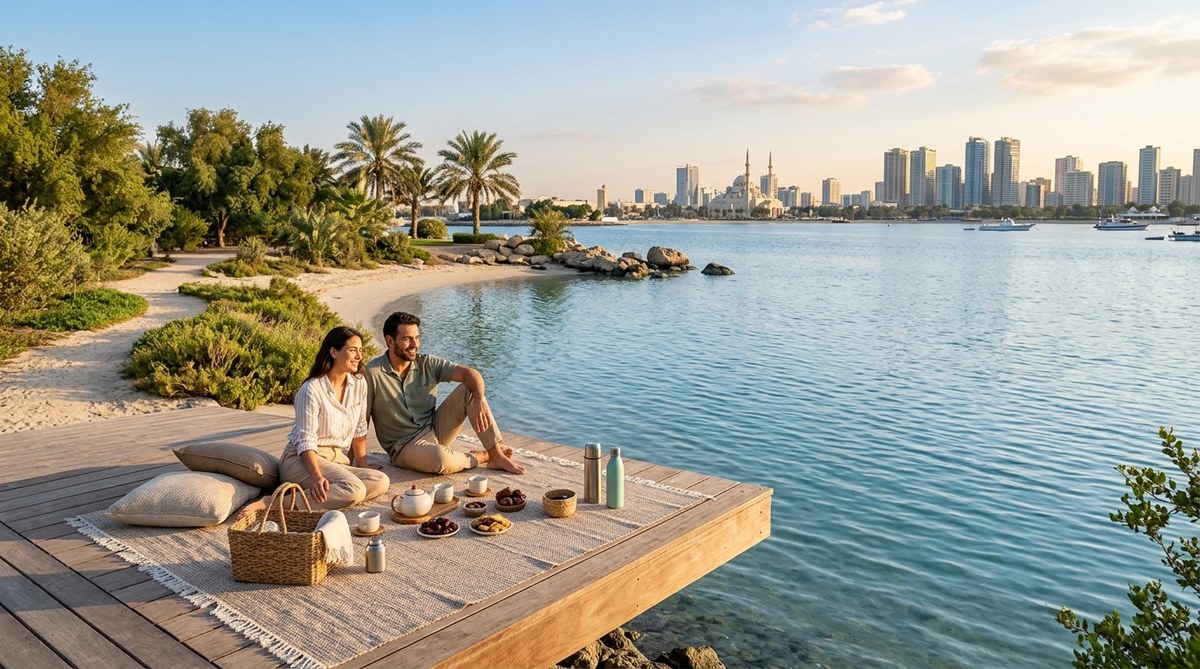
Al Majaz Waterfront is not a heritage site, but it offers a beautiful contrast to the old city. The walkway is lined with cafes and fountains. You can see the Sharjah skyline reflected in the water. This is a good spot to rest your feet and take photos.
Timing: Aim to arrive around 4:30 PM. The light is golden, and the temperature drops.
8. Visit the Blue Souk (Central Market)
The Blue Souk is a landmark building with blue tile work. It houses over 600 shops selling everything from gold jewelry to carpets. Even if you do not buy anything, the architecture is worth seeing. The twin buildings and the central arcade are photogenic.
9. Dinner at a Waterfront Restaurant
End your day with dinner at a restaurant along the Al Majaz waterfront. Many places serve a mix of Arabic and international dishes. Try a seafood platter if you enjoy fresh fish. The grilled hammour is a local favorite.
A Practical Table for Your Day
Here is a summary of what to prioritize and what to skip during your self guided day.
| Do This | Avoid This |
|---|---|
| Start early at 8:00 AM | Starting after 10:00 AM in summer |
| Wear closed toed walking shoes | Wearing flip flops for the souk |
| Carry a refillable water bottle | Buying plastic bottles at every stop |
| Use public parking near the Corniche | Driving into the narrow heritage streets |
| Ask locals for directions | Relying only on phone maps in the souk |
How to Plan Your Route Step by Step
This numbered list gives you a clear sequence for the day. Follow it in order for a smooth experience.
- 8:00 AM — Arrive at Heart of Sharjah parking. Visit the Calligraphy Museum.
- 9:00 AM — Walk through Souk Al Arsah. Take photos of the wind tower houses.
- 9:30 AM — Breakfast at a local cafe. Order karak and chebab.
- 10:30 AM — Walk to Sharjah Fort. Spend one hour inside.
- 12:00 PM — Early lunch at an Emirati restaurant.
- 1:30 PM — Taxi to the Museum of Islamic Civilization. Spend 90 minutes there.
- 3:30 PM — Rest at a cafe near the museum.
- 4:30 PM — Walk along Al Majaz Waterfront.
- 5:30 PM — Visit the Blue Souk.
- 7:00 PM — Dinner at a waterfront restaurant.
What to Pack for a Heritage Day in Sharjah
Your bag should be light but prepared for the climate and walking.
- Comfortable walking shoes (you will cover about 6 kilometers)
- A scarf or shawl (useful for entering mosques or for sun protection)
- Sunscreen and sunglasses
- A refillable water bottle (there are public water stations in the Heart of Sharjah)
- A small notebook or phone for photos (no tripods needed in most museums)
- Cash for small purchases at the souk (some stalls do not accept cards)
Common Mistakes to Avoid
Even seasoned travelers make small errors when visiting heritage districts. Here are the most common ones and how to avoid them.
- Rushing through the souk. The best finds are in the side alleys. Give yourself at least 45 minutes to wander without a destination.
- Skipping the Calligraphy Museum. Many visitors think it is a niche interest, but the artwork is beautiful and the space is calm. It is one of the most underrated museums in Sharjah.
- Eating at a chain restaurant. You are in a heritage district. Eat where the locals eat. Ask your taxi driver for a recommendation.
- Forgetting to check prayer times. Some museums close for 30 minutes during prayer. Plan around this. The closures are usually at noon and 3:00 PM.
For a deeper look at the city’s less crowded spots, check out this guide to discovering Sharjah’s hidden gems for a unique cultural experience. It pairs well with a heritage day itinerary.
Why 2026 Is a Great Year to Visit
Sharjah continues to invest in its heritage districts. New walking paths have been added, and more interpretive signage is now available in English. The Heart of Sharjah project is nearing completion, which means more restored buildings and public spaces are open. The city is also hosting several cultural festivals in 2026, though this itinerary focuses on the permanent sites rather than events.
If you are planning a longer stay, consider reading about how to experience Sharjah like a local in 2026. It offers tips that go beyond the typical tourist trail.
Your Day, Your Pace
The best part of a self guided itinerary is that you control the rhythm. You can linger at a museum bench or skip the Blue Souk if you prefer more time at the fort. The heritage districts reward slow travelers. Sit on a shaded bench, watch the light change on the coral walls, and listen to the sounds of the city.
Final practical note: Download a map of the Heart of Sharjah before you go. The streets are not always straight, and phone signals can be weak inside some of the older buildings. A paper map from the visitor center is also a good backup.
Sharjah’s heritage districts are not just for tourists. They are for anyone who wants to understand the UAE beyond the skyscrapers. This 2026 itinerary gives you a structured but flexible day. Use it as a starting point. Modify it based on your interests. And most importantly, enjoy the walk.