skylar
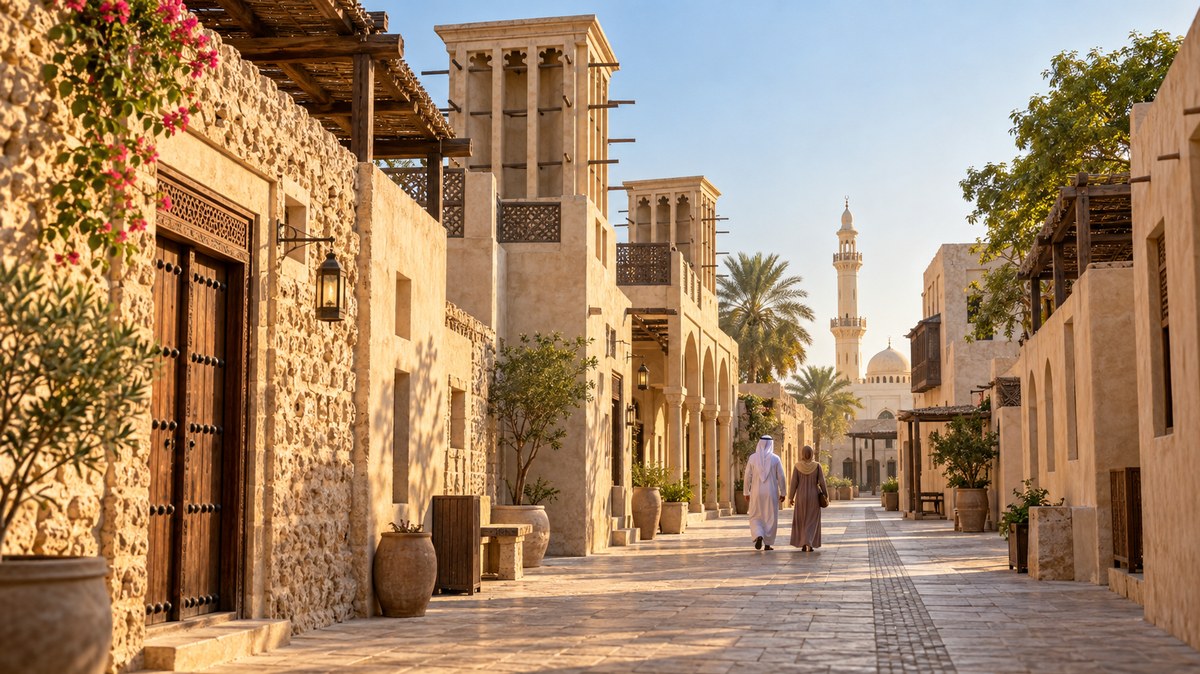
The air in Sharjah’s old quarter smells of sandalwood, strong coffee, and sun warmed stone. You hear the distant call to prayer mix with the clatter of a metalworker’s hammer. This is not a museum staged for tourists. It is a living, breathing neighborhood where families have lived for generations. A self-guided walk through these districts gives you the freedom to pause when a doorway catches your eye, to linger at a spice stall, or to sit on a bench and watch life pass by. This guide will help you plan a perfect Sharjah heritage walking tour, one that moves at your own pace.
A self-guided Sharjah heritage walking tour lets you uncover the Heart of Sharjah on your own terms. This itinerary leads you through restored wind tower houses, bustling souks, and quiet courtyards. You will visit the Al Hisn Fort, the Souk Al Arsah, and the Bait Al Naboodah house, with stops for traditional Emirati food and Arabic coffee. The best time to walk is early morning or late afternoon from October to April.
Why Walk the Heritage Districts Yourself
Guided tours have their place, but a self-guided Sharjah heritage walking tour offers something different. You set the rhythm. You can spend ten minutes in a calligraphy museum or two hours in a single courtyard. You can take a detour down a shaded alley because it looks interesting. You can stop for a second cup of cardamom spiced coffee without feeling rushed.
The Heart of Sharjah project has restored over 600 buildings. These include traditional coral stone houses, ancient mosques, and the old souk. Walking through this area is like flipping through a living history book. You see the wind towers that cooled homes before air conditioning. You walk on pathways that pearl traders used a century ago. Every corner has a story.
Your Starting Point and Best Time to Walk
Start your walk at the Heart of Sharjah Visitor Centre. It is located near the main entrance of the heritage district. Pick up a free map and ask about any special exhibitions happening that day. The staff are friendly and happy to offer tips.
The best months for walking are October through April. The weather is warm but not punishing. Start your walk at 8:00 AM to beat the heat and the crowds. The morning light makes the sandstone buildings glow. If you visit in summer, start at 7:00 AM and plan to finish by 10:30 AM. Carry a water bottle and wear a hat.
A Step by Step Itinerary for Your Self-Guided Walk
Here is a logical route that covers the main highlights. It is designed to loop back near your starting point.
-
Begin at the Al Hisn Fort (Sharjah Fort). This is the heart of the district. The fort was built in 1823 and served as the ruler’s residence. Today it houses a museum with artifacts, photographs, and weapons. Allow 30 to 45 minutes here.
-
Walk to the Souk Al Arsah. This is one of the oldest souks in the UAE. It has been restored to look exactly as it did in the 1950s. The shops sell textiles, antiques, perfumes, and handmade crafts. The covered walkway keeps you shaded. Spend 30 minutes browsing.
-
Visit the Bait Al Naboodah House. This is a restored pearl merchant’s home. The architecture is stunning. You will see carved wooden doors, gypsum decorations, and a central courtyard. It gives you a real sense of how a wealthy family lived in the early 1900s.
-
Stop at the Al Midfa House. This is a smaller but equally charming house. It now serves as a cultural center. Check if there is an art exhibition or a poetry reading happening during your visit.
-
Walk through the Al Shuwaihiheen neighborhood. This is the residential part of the heritage district. The streets are narrow and quiet. Look for the old mosques and the traditional barajeel (wind towers). This is a great spot for photography.
-
End at the Al Qasba area. This is a short walk from the heritage district. You can sit by the canal, watch the boats, and have lunch at one of the waterfront restaurants.
What to Pack for a Comfortable Walk
Bringing the right gear makes your walk much more enjoyable. Here is a checklist:
- Comfortable walking shoes with good grip. The streets are paved but uneven in places.
- A refillable water bottle. There are public water fountains near the visitor centre.
- Sun protection. A hat, sunglasses, and sunscreen are essential.
- A light scarf or shawl. You will need it if you want to enter a mosque or a government building.
- A small notebook and pen. You might want to jot down names of shops or dishes you like.
- Your phone or camera. The architecture is very photogenic.
Where to Eat During Your Walk
You will work up an appetite. The heritage district has some excellent places to eat.
| Restaurant Name | Cuisine Type | Best For | Price Range |
|---|---|---|---|
| Al Bait Restaurant | Emirati and Arabic | Traditional breakfast and lunch | Moderate |
| The Coffee House at Heart of Sharjah | Arabic coffee and pastries | A mid morning break | Budget |
| Al Khan Restaurant | Seafood and grilled meats | Lunch near the canal | Moderate to high |
| Astor Restaurant | Pakistani and Indian | A hearty, affordable meal | Budget |
For a truly local experience, walk to the nearby Al Jubail Market. It is a short walk from the heritage district. You can buy fresh fruit, dates, and nuts. There are also small eateries serving shawarma and falafel.
Expert Advice: “The best time to visit the Souk Al Arsah is just after the morning prayer. The shopkeepers are opening their doors, and the light filters through the wooden latticework. You will hear the shopkeepers greet each other. It feels like stepping into a different century.” — Ahmed Al Suwaidi, a local historian based in Sharjah.
Common Mistakes to Avoid on a Self-Guided Tour
Even experienced travelers make small errors. Here are the most common ones and how to avoid them.
- Skipping the map. The heritage district can feel like a maze. Pick up the free map at the visitor centre. It shows all the restored houses and public toilets.
- Wearing the wrong shoes. The streets are beautiful but they are old. Cobblestones and uneven pavements are everywhere. Heels or flimsy sandals will make your walk painful.
- Forgetting to carry cash. Many small shops and tea stalls do not accept cards. You will need small notes for buying spices, dates, or a cup of tea.
- Rushing through the houses. Each restored house has information boards. Read them. They tell you about the family who lived there and how the rooms were used.
- Ignoring the heat. Even in October, the sun can be strong. Take breaks in shaded courtyards. Drink water often.
How to Extend Your Walk into the Afternoon
If you have energy left, you can continue your Sharjah heritage walking tour into the afternoon. The area around the Al Qasba canal is pleasant for a stroll. You can also walk to the Sharjah Art Museum or the Sharjah Calligraphy Museum. Both are within 15 minutes of the heritage district.
For a different perspective, walk to the Al Majaz Waterfront in the evening. It is about 20 minutes on foot. The fountains and lights create a relaxed atmosphere. You can have dinner there and watch the sunset over the lagoon.
A Quick Reference for Your Walk
This table summarizes the main stops and the time you should allocate.
| Stop | Time Needed | Entry Fee | Notes |
|---|---|---|---|
| Al Hisn Fort | 30 to 45 minutes | Free | Great museum with local history |
| Souk Al Arsah | 30 to 60 minutes | Free | Bargaining is expected |
| Bait Al Naboodah | 20 to 30 minutes | Free | Beautiful courtyard and woodwork |
| Al Midfa House | 15 to 20 minutes | Free | Check for exhibitions |
| Al Shuwaihiheen streets | 20 to 30 minutes | Free | Best for photography |
| Al Qasba area | 30 to 60 minutes | Free | Good for lunch and rest |
Making the Most of Your Day in Sharjah
A self-guided walk is about more than just seeing sights. It is about connecting with the place. Talk to the shopkeepers. They are often happy to share stories about their family history. Try a piece of luqaimat (sweet dumplings) from a street vendor. Sit in a courtyard and listen to the sounds around you.
If you are visiting from Dubai, the journey is easy. You can take a taxi or a bus from Union Metro Station. The trip takes about 30 minutes. Plan to leave Dubai by 7:30 AM to arrive in Sharjah by 8:00 AM. For more details on the journey, read our guide on how to travel from Dubai airport to Sharjah in 2026.
Planning Your Visit Around Local Events
Sharjah’s cultural calendar is full of events that can add magic to your walk. The Sharjah Heritage Days festival usually takes place in April. During this time, the heritage district comes alive with traditional music, dance, and craft demonstrations. The Sharjah Light Festival in February illuminates the old buildings with stunning projections. Check the official Sharjah events calendar before you go.
If you are traveling with family, the heritage district is very safe and child friendly. The streets are closed to traffic. Kids can run around in the courtyards. For more ideas, see our list of top family-friendly activities to experience in Sharjah.
Your Own Walk Through Time
A Sharjah heritage walking tour is not a race. It is a chance to slow down in a world that often moves too fast. The wind towers, the carved doors, the scent of oudh in the air, these are the details that stay with you long after you leave. Take your time. Let the district reveal itself to you. By the end of the walk, you will feel like you have not just seen history, but touched it. And when you finally sit down for a cup of Arabic coffee, you will know that you earned it.